
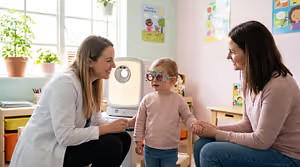
Your child's vision helps shape how they learn, move, play, and connect with the world. From following a parent's face as a baby to reading the board at school, visual skills develop quickly through childhood. Knowing a few age-appropriate vision milestones can help you notice changes early and feel more prepared for your child's eye care.
At White Oak Vision center, we help families in Cincinnati support healthy vision at every stage of childhood.
Vision Milestones in the First Year
Babies begin using their eyes from birth, but clear, coordinated vision develops over time. In the first few months, your baby may start to:
- Look at faces and bright, high-contrast objects
- Briefly follow a moving toy or person
- Make eye contact
- Reach toward objects they see
- Coordinate both eyes together more consistently
By about 6 months, many babies can track moving objects more smoothly and show better depth awareness. If one eye seems to turn in or out often after the first few months, your baby does not make eye contact, or they do not seem to follow objects, it is worth discussing with an eye doctor.
Toddler and Preschool Vision Skills
As children become more mobile, their vision supports balance, hand-eye coordination, and early learning. Toddlers and preschoolers often begin to:
- Recognize familiar people and objects from farther away
- Navigate stairs, playgrounds, and new spaces with more confidence
- Stack blocks, draw simple shapes, and complete puzzles
- Look at books and pictures with interest
- Use both eyes together for depth perception and movement
Children do not always realize that their vision is different from other people's. They may simply adapt by sitting very close to a screen, avoiding coloring or puzzles, or turning their head to use one eye more than the other. A pediatric eye exam can assess more than how clearly your child sees; it can also evaluate eye alignment, tracking, focusing, and eye health.
Vision Milestones for School-Aged Children
Once school begins, vision becomes a major part of the learning day. Children need to shift focus between a desk, a book, a screen, and the front of the classroom. They also rely on visual skills for sports, hobbies, and social activities.
A school-aged child should generally be able to see clearly at distance and near, follow words across a page, and keep their place while reading. Watch for signs such as:
- Squinting or covering one eye
- Frequent headaches or tired eyes
- Losing their place while reading
- Avoiding close-up work
- Rubbing their eyes often
- Sitting unusually close to books or screens
- Complaints that the board looks blurry
- A drop in confidence with schoolwork or sports
These signs do not always mean a child needs glasses, but they are good reasons to schedule a comprehensive eye exam. A school screening can be helpful, but it may not detect concerns involving focusing, eye teaming, depth perception, or eye health.
When Should Your Child Have an Eye Exam?
Children should have eye care at key stages of development, including during infancy, around age 3, and before starting school. After that, many children benefit from annual exams or visits based on their eye doctor's recommendations.
An exam is especially important when there is a family history of eye conditions, your child has developmental concerns, or you notice a new change in how they see or use their eyes. If your child has eye redness, pain, sensitivity to light, or a sudden vision change, visit our eye condition treatment page for guidance on getting timely care.
Support Your Child's Vision as They Grow
Tracking vision milestones is not about expecting every child to develop on an exact schedule. It is about noticing patterns, asking questions, and giving your child the support they need to see comfortably and confidently.
The team at White Oak Vision center is here to make children's eye care welcoming and age-appropriate for families in Cincinnati. If you have noticed a concern—or simply want to stay proactive about your child's vision—request an appointment today.